

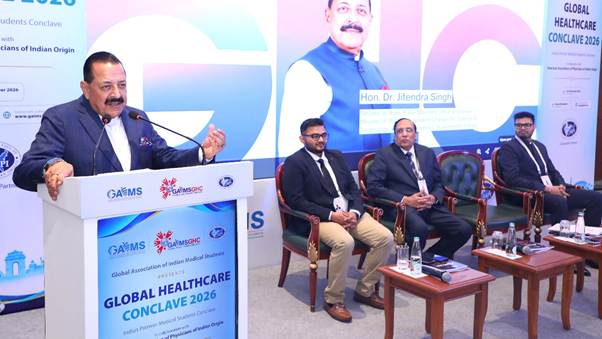
New Delhi: Union Minister of State (Independent Charge) for Science & Technology and Earth Sciences, Dr Jitendra Singh, said India is undergoing a significant transformation in healthcare through indigenous research, medical innovation and affordable advanced treatment, according to a press release issued by the Press Information Bureau (PIB) on November 28, 2026.
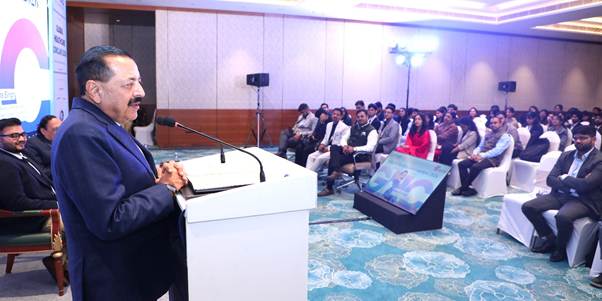
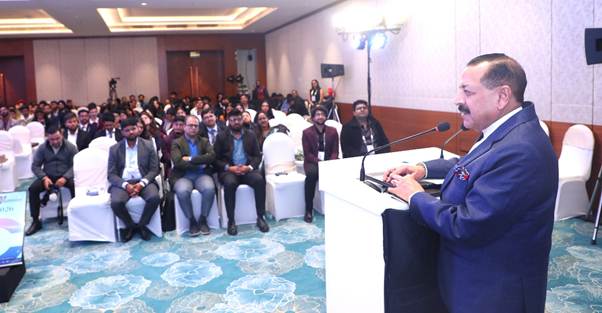
Dr Singh was addressing the Global Healthcare Conclave 2026, organised by the Global Association of Indian Medical Students (GAIMS), where he released the official souvenir of the event and interacted with young medical students, the PIB release said.
AI, clinical judgement must go hand in hand
The Minister said that while artificial intelligence (AI), quantum technologies and advanced diagnostic tools are transforming healthcare, technology cannot replace the fundamental clinical understanding required of a doctor. He said medical education must continue to emphasise bedside learning, direct patient interaction and clinical examination, per the release.
He said India, once dependent on foreign medical technologies, is now developing indigenous solutions in vaccines, antibiotics, gene therapy and cancer treatment while emerging as a cost-effective destination for quality healthcare.
Genome programme and precision medicine
Referring to the Indian Genome Programme, Dr Singh said around 10,000 to 15,000 individuals from 84 different populations have already been sequenced, with an initial target of reaching one million individuals, the release stated. He said this database could strengthen India’s precision medicine capabilities and benefit global healthcare research.
He also mentioned ongoing research aimed at genetically engineering E. coli to produce GLP analogues, which could help address insulin resistance and associated metabolic conditions.
Vaccines, antibiotics and gene therapy
The Minister cited India’s HPV vaccination programme, under which more than 50 lakh adolescent girls have been vaccinated, according to the release. He also referred to two indigenously developed antibiotics in the last two years, one of which is being marketed by Wockhardt.
Dr Singh cited a successful gene therapy trial for haemophilia at Christian Medical College (CMC), Vellore, published in the New England Journal of Medicine, as an example of India’s growing ability to contribute to advanced medical research. He also referred to CAR-T cell therapy and cancer research at Tata Memorial Centre, Mumbai, as examples of India’s progress in making advanced cancer treatment more cost-effective.
Rising burden of lifestyle diseases
The Minister said India is facing a dual burden of communicable and non-communicable diseases, with Type-2 diabetes, cardiovascular diseases, hypertension, dyslipidemia and fatty liver disease emerging as major public health challenges, often at younger ages, the release said. He referred to central obesity patterns among Indian populations, noting that lean individuals can still carry significant visceral fat, an independent risk factor for metabolic and cardiovascular conditions.
Highlighting government efforts, Dr Singh referred to the Ayushman Bharat scheme’s expanded financial protection, including coverage for pre-existing diseases, and the expansion of dialysis facilities across district hospitals, according to the PIB release.
Event attendees
Dr Minu Bhajpai, Vice President of the National Board of Examinations in Medical Sciences (NBEMS), attended as Guest of Honour, while Dr Shubham Anand, National Chairman of GAIMS, and other members of the organisation’s executive were present, the release said. Dr Singh encouraged medical professionals from such organisations to contribute to research, healthcare delivery and public health advocacy as India works towards the vision of Viksit Bharat 2047.
Source: pib.gov.in
Photos: PIB

